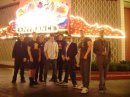
Part I -- Identify the shamed journalists in the mugshots above, and describe why each was fired. Hint: they worked for (from left to right) The New Republic, The New York Times, USA Today and The Washington Post.
Part II -- The Mustang Daily even found itself embroiled in a plagiarism scandal last year. What were the details of the incident? (BONUS QUESTION: What ethical dilemma did local media (Mustang Daily, New Times and SLO Tribune) face when reporting this story)?
Part III -- Identify the 'character' of each organization or individual listed below. Some questions to answer: What do they do? Who pays them? What is their agenda, if any? Who’s interest are they serving?
1. Corpwatch
2. Globalwitness
3. Laborstart
4. Associated Press
5. Reuters
6. Electronic Authorization Partnership
7. David Romero
8. Jack T. O'Conell
9. Julie Rodewald
10. Deborah Linden
Part 1:
1. This is Stephen Glass, a journalist for The New Republic.. He committed several cases of journalism fraud. In 1998 he wrote an article called “Hack Heaven.” The article was very vivid, as if he was actually there. Forbes magazine presented evidence that the story had been fabricated. Soon somebody from The New Republic confirmed that the article was fabricated, along with 26 other stories he wrote. He was fired.
2. This is Jason Blair, a writer for the New York Times. He resigned from his job because he blatantly plagiarized an article written by Macarena Hernandez of the San Antonio Express-News. It was later discovered that 36 of 73 news stories he had written since October of 2003 were potentially plagiarized.
3. This is Jack Kelley, a former correspondent and Pulitzer Prize nominee for USA Today. Kelley, along with many other staff members for USA Today resigned in March of 2004, after it was discovered that Kelley had been fabricating stories. He went as far as to write scripts for people he knew, so they could pretend to be sources.
4. This is Janet Cooke, a staff writer for The Washington Post who won a Pulitzer Prize in 1980 for a fabricated story. The story, titled “Jimmy’s World” depicted the tragic tale of an eight year old heroin addict. When city officials were unsuccessful in finding the boy, people began to accuse the story of being fraudulent. Cooke confessed to fabricating the story after the editors from the Washington Post began pressuring her. Cooke resigned, and now lives in shame.
Part 2:
Rebecca Laman, a writer for the Mustang Daily, plagiarized three articles in 2005. Paragraphs taken from other web site articles were found in the stories: Men So-Forte, Fourth of July Do’s and Don’ts, and a review for “The Fantastic Four.” It seems like reporting the story may have been unethical because it tarnishes the credibility of Cal Poly’s newspaper and the Journalism department as a whole, and nobody wants to see their beloved college, which means so much to the community, take a blow to its great reputation.
Part 3:
1. CorpWatch: A research group in Oakland, California that tries to bring global justice, Independent media activism and democratic control over corporations. They are serving the interest of anybody who wants corporations to act in an ethical manner.
2. Global Witness: A Non-governmental Organization that links natural resource exploitation, conflict, poverty, corruption, and human rights abuses. They get 40% of their income from private trusts and foundations, 40% from grants from governments internationally, and 20% from development NGO’s.
3. Labourstart: An online news service that distributes news from over 400 correspondents, and appears in 20 languages. Labourstart is also on the radio at all times. They are serving the interest of people looking for employment in the Trade Union movement.
4. Associated Press: An American News agency owned by many news organizations, which write and distribute the news stories. It is the only Nationally oriented news service in America.
5. Reuters: A news service that provides international stories to newspapers and broadcasters. It gets most of its money from hooking the financial markets up with trading products.
6. Electronic Authorization Partnership: A financial software company that transfers money. It deals with electric filing of checks and conversions.
7. David Romero has popped up on google and other search engines as many different people. There is a painter named David Romero, a percussionist, and a congressman in jail among other things. This name has not popped up on different sites, but I was unable to find any relevant news for “David Romero.” I apologize for not knowing who this is.
8. Jack T. O’Connell: A California politician who serves as the California State Superintendent of Public Instruction. His main contribution to state legislation has been making the High School Exit Exam mandatory for graduation.
9. Julie Rodewald: The SLO county clerk recorder. Her job is to make sure the counties voters are well informed.
10. Deborah Linden: The CEO of Island One Resorts. She was appointed to the Board of Directors at Colonial BancGroup, which is located in Alabama.
Tuesday, February 6, 2007

Monday, January 29, 2007
Blog Assignment #5
Story ideas surround you. All you have to do is observe your surroundings and you will find news stories to write about. A walk through your campus is a start. Answer the following questions about a couple buildings on campus (in a new blog entry). 1A. For whom were the buildings named? 1B. Are there plaques on benches, walls, doorways named for people who meant something to your university? 1C. Who were they? 1D. What did they do? 1E. When did they live, die or contribute something to your school? 2A. Are there signs around campus about construction? 2B. What is being built or renovated?
The Orfalea College of Business:
1a. The building was named after Paul Orfalea, even though the plaque is dedicated to Al and Virginia Orfalea, which are most likely his parents.
1b. In terms of his research and commitment to the business, Orfalea did not mean anything to Cal Poly because he graduated from USC. However, Orfalea was a huge fan of Cal Poly's "Learn by doing" philosophy. He donated a lot of money to the business department because of his support for Cal Poly's educational system. This money was put into their very nice business building.
1c and 1D. Paul Orfalea is the founder of Kinkos, which is a very successful copying and printing company. A large reason for his companies success was due to his unique philosophy about running a business that allowed creative imput from everybody involved. Orfalea is a guest lecturer at UCSB.
1e. Orfalea is still alive today, and relatively young. He contributed money to the school around April 20th, 2001, because that is the date on the plaque.
Graphic Communication Department:
1a. The department named an endowment in honor of Terry Bell.
1b. The plaque is named after somebody who meant a lot to Cal Poly. the plaque states its dedication to Terry Bell because of his dedicated service to the GRC program, support assisting in the development of laboratories, and his support for Cal Poly's "learn by doing" philosophy.
1C and 1D. Terry Bell was an important professor at Cal Poly who helped develop the department significantly. He also founded a company called ColorGraphics inc. This company is very important to Cal Poly, and some of the endowment goes to support ColorGraphics inc.
1E. Terry Bell contributed greatly to Cal Poly during his time as a teacher, and a founder of ColorGraphics inc. He died before the endowment was created, but the plaque doesn't state when that was. The Cal Poly website doesn't offer much information about when he was a part of the faculty.
Engineering and Architecture buildings:
2a and b: There is a sign very near the business about some construction that is in progress right now. Cal Poly is renovating and replacing some Engineering and architecture buildings. According to the sign, the school is in phase two of the project. The General contractor is Straub Construction inc, and the architect for the project is Austin Veum Robbins Partners.
Poly Canyon Village Housing:
2a and 2b: The Poly Canyon Village housing project is massive in scale. Cal Poly is using thirty acres of land to build three neighborhoods of apartments. It will be done within the next few years, and will house students who are second year and above.
The Orfalea College of Business:
1a. The building was named after Paul Orfalea, even though the plaque is dedicated to Al and Virginia Orfalea, which are most likely his parents.
1b. In terms of his research and commitment to the business, Orfalea did not mean anything to Cal Poly because he graduated from USC. However, Orfalea was a huge fan of Cal Poly's "Learn by doing" philosophy. He donated a lot of money to the business department because of his support for Cal Poly's educational system. This money was put into their very nice business building.
1c and 1D. Paul Orfalea is the founder of Kinkos, which is a very successful copying and printing company. A large reason for his companies success was due to his unique philosophy about running a business that allowed creative imput from everybody involved. Orfalea is a guest lecturer at UCSB.
1e. Orfalea is still alive today, and relatively young. He contributed money to the school around April 20th, 2001, because that is the date on the plaque.
Graphic Communication Department:
1a. The department named an endowment in honor of Terry Bell.
1b. The plaque is named after somebody who meant a lot to Cal Poly. the plaque states its dedication to Terry Bell because of his dedicated service to the GRC program, support assisting in the development of laboratories, and his support for Cal Poly's "learn by doing" philosophy.
1C and 1D. Terry Bell was an important professor at Cal Poly who helped develop the department significantly. He also founded a company called ColorGraphics inc. This company is very important to Cal Poly, and some of the endowment goes to support ColorGraphics inc.
1E. Terry Bell contributed greatly to Cal Poly during his time as a teacher, and a founder of ColorGraphics inc. He died before the endowment was created, but the plaque doesn't state when that was. The Cal Poly website doesn't offer much information about when he was a part of the faculty.
Engineering and Architecture buildings:
2a and b: There is a sign very near the business about some construction that is in progress right now. Cal Poly is renovating and replacing some Engineering and architecture buildings. According to the sign, the school is in phase two of the project. The General contractor is Straub Construction inc, and the architect for the project is Austin Veum Robbins Partners.
Poly Canyon Village Housing:
2a and 2b: The Poly Canyon Village housing project is massive in scale. Cal Poly is using thirty acres of land to build three neighborhoods of apartments. It will be done within the next few years, and will house students who are second year and above.
Wednesday, January 24, 2007
Blog #3
My Story Ideas:
1.Cal Poly's interest in switching to the UC system.
2.Analyzing the successes and failures of the next wave of video game consoles.
3.A guide to drinking games/ why beer pong is so popular in colleges across the nation.
1.Cal Poly's interest in switching to the UC system.
2.Analyzing the successes and failures of the next wave of video game consoles.
3.A guide to drinking games/ why beer pong is so popular in colleges across the nation.
Tuesday, January 23, 2007
Assignment #3
A Good Lead: Browse through a variety of print media (online or otherwise) and copy/paste three leads (must be in the first two sentences of story) that stand out to you as especially curious, engaging, humorous, off-the-wall, etc. Write a short paragraph under each lead describing why you chose it. Post as a new Blog entry.
1. “WASHINGTON, DC—President Bush announced in a hastily arranged press conference Monday that he wanted to make the entire country "as presentable as possible" for visiting Chinese President Hu Jintao, who was scheduled to arrive for a five-day state visit in a matter of hours.”
-The Onion
I thought that this lead was very witty, and introduces the article very well. First of all, I personally think that The Onion is one of the funniest sites online. Their humor is very unique in that they will present fake stories that are too ridiculous or uninteresting to take seriously. The stories, such as this one, are usually ironic in nature. When reading this lead, it is assumed that Bush is trying to clean up America’s policies and governmental structure. The next paragraph, however, reveals that Bush is literally trying to clean up America by picking up trash and clean dirty dishes in homes throughout America. There is a picture of Bush mopping the sidewalk. The Onion is being very ironic with this story. They are basically saying that if Bush were told to make the country presentable for a foreign leader, he would take the advice literally.
2. “By now, everyone knows about the “surge” into Iraq. However, I will spare you from having to read another editorial about this decision. Instead, I want to focus on a growing trend in Iraq, which no one is talking about: the increase in drug use by U.S. soldiers to cope with stress.”
-Mustang Daily
I think this is a very engaging lead for an editorial about the war in Iraq. The writer knows that when people look at this liberally biased article in the paper, they are most likely expecting to read something about how horrible of a decision it was to send more troops into the horrible Iraq war. He pokes fun at this tendency by announcing that his article’s focus will not be what everyone expects it to be. By making this proclamation, the reader becomes curious as to what the article will now be about, and then he reveals that he will be discussing the increase in drug use by US soldiers. Since this issue hasn’t been covered much in the news, it is likely to interest many readers.
3. “BOISE, Idaho (AP) -- A man accused of kidnapping two Idaho children, killing one of them, after slaughtering their family has confessed to the killings of three other children a decade ago in Washington state and California, federal prosecutors said Tuesday.
The prosecutors cited the confessions to the old killings in court papers saying they intended to seek the death penalty against Joseph Edward Duncan III, who was indicted last week on charges involving the two northern Idaho children.”
I chose this article because it stuck out as one of the most violent, disturbing leads I have read. It is a classic hard lead that tries to get out a lot of information to the reader right away. Just by reading this lead, the reader is already aware of how nasty this story is. The words that stand out to me in this article are: killing, slaughtering, death, indicted, children. If news about violence is popular, then this story hit the jackpot. It is interesting that when talking about the murders this man committed, the writer uses the word “killing” when describing one of the children, then uses the word “slaughtering” to describe the family, and then goes back to “killing” when introducing the final three dead children. Using “killing” three times in a row would have probably ruined the flow of the lead. Oh, wait, I think the subject matter already accomplished that task.
1. “WASHINGTON, DC—President Bush announced in a hastily arranged press conference Monday that he wanted to make the entire country "as presentable as possible" for visiting Chinese President Hu Jintao, who was scheduled to arrive for a five-day state visit in a matter of hours.”
-The Onion
I thought that this lead was very witty, and introduces the article very well. First of all, I personally think that The Onion is one of the funniest sites online. Their humor is very unique in that they will present fake stories that are too ridiculous or uninteresting to take seriously. The stories, such as this one, are usually ironic in nature. When reading this lead, it is assumed that Bush is trying to clean up America’s policies and governmental structure. The next paragraph, however, reveals that Bush is literally trying to clean up America by picking up trash and clean dirty dishes in homes throughout America. There is a picture of Bush mopping the sidewalk. The Onion is being very ironic with this story. They are basically saying that if Bush were told to make the country presentable for a foreign leader, he would take the advice literally.
2. “By now, everyone knows about the “surge” into Iraq. However, I will spare you from having to read another editorial about this decision. Instead, I want to focus on a growing trend in Iraq, which no one is talking about: the increase in drug use by U.S. soldiers to cope with stress.”
-Mustang Daily
I think this is a very engaging lead for an editorial about the war in Iraq. The writer knows that when people look at this liberally biased article in the paper, they are most likely expecting to read something about how horrible of a decision it was to send more troops into the horrible Iraq war. He pokes fun at this tendency by announcing that his article’s focus will not be what everyone expects it to be. By making this proclamation, the reader becomes curious as to what the article will now be about, and then he reveals that he will be discussing the increase in drug use by US soldiers. Since this issue hasn’t been covered much in the news, it is likely to interest many readers.
3. “BOISE, Idaho (AP) -- A man accused of kidnapping two Idaho children, killing one of them, after slaughtering their family has confessed to the killings of three other children a decade ago in Washington state and California, federal prosecutors said Tuesday.
The prosecutors cited the confessions to the old killings in court papers saying they intended to seek the death penalty against Joseph Edward Duncan III, who was indicted last week on charges involving the two northern Idaho children.”
I chose this article because it stuck out as one of the most violent, disturbing leads I have read. It is a classic hard lead that tries to get out a lot of information to the reader right away. Just by reading this lead, the reader is already aware of how nasty this story is. The words that stand out to me in this article are: killing, slaughtering, death, indicted, children. If news about violence is popular, then this story hit the jackpot. It is interesting that when talking about the murders this man committed, the writer uses the word “killing” when describing one of the children, then uses the word “slaughtering” to describe the family, and then goes back to “killing” when introducing the final three dead children. Using “killing” three times in a row would have probably ruined the flow of the lead. Oh, wait, I think the subject matter already accomplished that task.
Sunday, January 21, 2007
Assignment #2
1. Lead
2. Backup to the lead
3.Elaboration
4.Background
5.Impact
6.Elaboration
7.Reaction
8.Kicker
2. Backup to the lead
3.Elaboration
4.Background
5.Impact
6.Elaboration
7.Reaction
8.Kicker
Tuesday, January 16, 2007
Blog Assignment #1
J203 Assignment #1:
Pick a popular news story and find at least three forms of media (i.e. Website (print), Podcast (audio), and MPEG (video)) that are disseminating the story. Write a one-page analysis of the pros and cons of each medium.
For this assignment I chose a story that is making headlines nationwide, and will undoubtedly affect the lives of millions of consumers. The below freezing temperatures in California are destroying a huge amount of citrus fruits that include oranges and lemons. The damages are going to cost the fruit industry hundreds of millions of dollars, and prices on these fruits are already flaring up at supermarkets across the country. I analyzed this story from three different perspectives: The NBC Nightly News, a New York Times Podcast over itunes, and an article from cnn.com. Each medium had its own set of advantages and disadvantages when it came to channeling this particular nationwide story.
The NBC Nightly News gave this story decent coverage. NBC only has about twenty minutes to discuss the nations top stories, so every sentence of script needs to be clear, concise and to the point. The story about the loss of citrus fruits was intertwined with another weather related story about the horrible ice accumulation in areas such as Oklahoma, where there is no electricity. Obviously the largest advantage of television news is the ability to show visuals for the story. NBC showed clips of orange trees that are completely frozen over. Visuals such as these enhanced my understanding for what was going on. NBC also showed a segment of an interview with one of the men who is in charge of the citrus fruit industry. NBC’s credibility is boosted when they allow the experts to comment on the story at hand. This story is fairly important for consumers, but it isn’t the type of news that people need to be immediately warned about. If people haven’t heard about the crisis, they will know something is wrong when they realize how expensive fruit is at supermarkets in the upcoming months. One downside to running this story on television is that the visuals are not all that interesting, and most people would probably prefer more in depth coverage of the story instead of a lot of visuals. NBC was simply unable cover the story thoroughly with the allotted time frame.
The article on CNN covered the story very well. The article, titled “Freeze kills $480 million Worth of Citrus” was fairly long, and included concrete facts that NBC, along with the Podcast were unable to mention. The article confidently stated that 480 million dollars worth of fruit had been destroyed. The other mediums provided vague numbers such as “hundreds of millions.” The article was also able to raise their credibility by quoting experts on the subject. While they didn’t physically show the man who was speaking on behalf of the citrus industry, they did introduce him and briefly list his credentials in the field. One aspect of the print article that clearly separated it from the rest was the use of citrus industry statistics from previous years. The current crisis was compared to a similar fruit crisis that took place in 1998. This inclusion allows the reader to effectively gauge how bad the fruit crisis really is. The way that America handled the crisis in 1998 is a good indicator of what is going to need to happen in order for the current situation to be resolved. For this story, the print medium is far superior to the others.
The Podcast from the New York Times was a good medium for helping make people aware of the story at hand, but the coverage was lacking in depth. This particular Podcast basically summarized the news from the front page of the New York Times. Overall, the Podcast sounded like a script from television news, but did not include any visuals. The brevity of the story, along with the lack of any visualization made the Podcast medium the weakest of the three. One redeeming value of the Podcast is that the listener is forced to listen to the story at hand, because that is all there is to do. There are no visuals to distract the viewer. Overall, Podcasts and radio news are most likely best suited for breaking news that needs to get out to people by any means necessary.
Pick a popular news story and find at least three forms of media (i.e. Website (print), Podcast (audio), and MPEG (video)) that are disseminating the story. Write a one-page analysis of the pros and cons of each medium.
For this assignment I chose a story that is making headlines nationwide, and will undoubtedly affect the lives of millions of consumers. The below freezing temperatures in California are destroying a huge amount of citrus fruits that include oranges and lemons. The damages are going to cost the fruit industry hundreds of millions of dollars, and prices on these fruits are already flaring up at supermarkets across the country. I analyzed this story from three different perspectives: The NBC Nightly News, a New York Times Podcast over itunes, and an article from cnn.com. Each medium had its own set of advantages and disadvantages when it came to channeling this particular nationwide story.
The NBC Nightly News gave this story decent coverage. NBC only has about twenty minutes to discuss the nations top stories, so every sentence of script needs to be clear, concise and to the point. The story about the loss of citrus fruits was intertwined with another weather related story about the horrible ice accumulation in areas such as Oklahoma, where there is no electricity. Obviously the largest advantage of television news is the ability to show visuals for the story. NBC showed clips of orange trees that are completely frozen over. Visuals such as these enhanced my understanding for what was going on. NBC also showed a segment of an interview with one of the men who is in charge of the citrus fruit industry. NBC’s credibility is boosted when they allow the experts to comment on the story at hand. This story is fairly important for consumers, but it isn’t the type of news that people need to be immediately warned about. If people haven’t heard about the crisis, they will know something is wrong when they realize how expensive fruit is at supermarkets in the upcoming months. One downside to running this story on television is that the visuals are not all that interesting, and most people would probably prefer more in depth coverage of the story instead of a lot of visuals. NBC was simply unable cover the story thoroughly with the allotted time frame.
The article on CNN covered the story very well. The article, titled “Freeze kills $480 million Worth of Citrus” was fairly long, and included concrete facts that NBC, along with the Podcast were unable to mention. The article confidently stated that 480 million dollars worth of fruit had been destroyed. The other mediums provided vague numbers such as “hundreds of millions.” The article was also able to raise their credibility by quoting experts on the subject. While they didn’t physically show the man who was speaking on behalf of the citrus industry, they did introduce him and briefly list his credentials in the field. One aspect of the print article that clearly separated it from the rest was the use of citrus industry statistics from previous years. The current crisis was compared to a similar fruit crisis that took place in 1998. This inclusion allows the reader to effectively gauge how bad the fruit crisis really is. The way that America handled the crisis in 1998 is a good indicator of what is going to need to happen in order for the current situation to be resolved. For this story, the print medium is far superior to the others.
The Podcast from the New York Times was a good medium for helping make people aware of the story at hand, but the coverage was lacking in depth. This particular Podcast basically summarized the news from the front page of the New York Times. Overall, the Podcast sounded like a script from television news, but did not include any visuals. The brevity of the story, along with the lack of any visualization made the Podcast medium the weakest of the three. One redeeming value of the Podcast is that the listener is forced to listen to the story at hand, because that is all there is to do. There are no visuals to distract the viewer. Overall, Podcasts and radio news are most likely best suited for breaking news that needs to get out to people by any means necessary.
Subscribe to:
Posts (Atom)